- About Us
- Areas We Serve
- Practice Areas
- Resources
- Contact Us


- About Us
- Areas We Serve
- Practice Areas
- Resources
- Contact Us
 50K
50K Clients Served
 40+
40+ years of experience
 550+
550+ 5-star reviews on Google

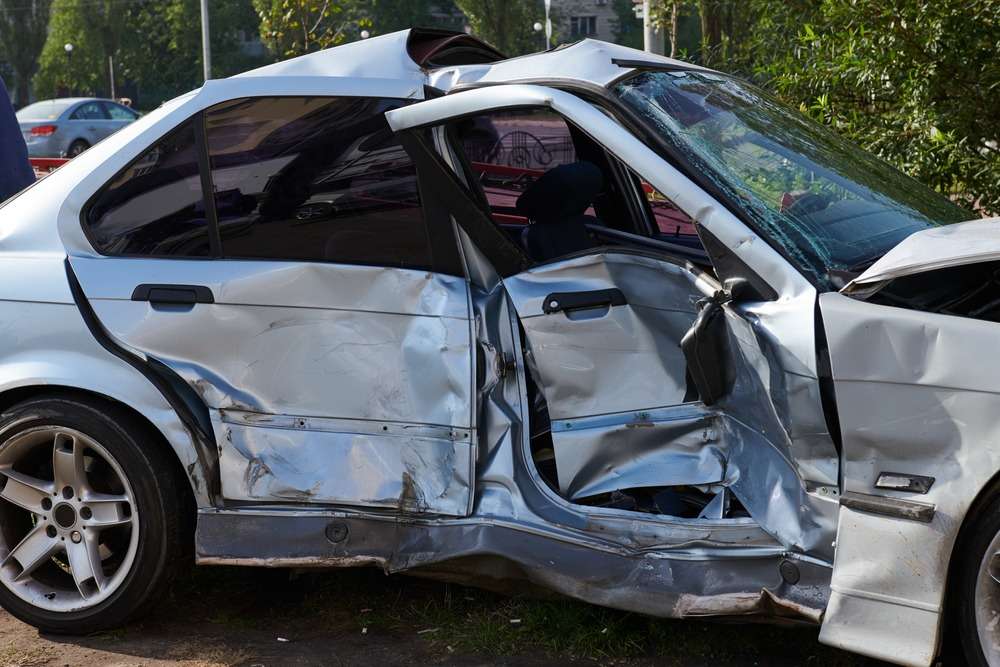
Research suggests that the type of injury most commonly associated with T-bone accidents is blunt force trauma, particularly to the chest and head. T-bone accidents, also known as side-impact collisions, occur when the front of a vehicle strikes the side of another vehicle, forming a T shape. Injury patterns in T-bone accidents are consistent among adults and children, who often suffer severe injuries from the impact occurring on the side on which they are seated or the vehicle rolling over.
Data from the National Highway Traffic Safety Administration (NHTSA) shows that angle collisions, such as T-bone accidents, accounted for more than 23% of all accidents in the United States in 2020.
Blunt force trauma, which refers to a type of injury caused by sudden force to the body, leads to more deaths than penetrating trauma, in which an object pierces the skin and creates an open wound. Injuries commonly associated with T-bone accidents include blunt force trauma, particularly to the upper half of the body.
In a study from Traffic Injury Prevention, researchers found that the second most common injuries in side collisions were head injuries.
Trauma to the brain led to more fatalities in these instances than injuries to other organs. Another study by the organization found that children in side-impact collisions experienced more head injuries than any other type.
The sudden force experienced by vehicle passengers in an accident can disrupt inertia, leaving the body little to no time to adjust to the impact. These abrupt movements can lead to serious spinal injuries, including those to the back and neck. Less clinically serious injuries such as whiplash can lead to extended periods of pain that can prevent the victim from working or participating in other daily activities. Fractures of the cervical bones in the neck and spinal cord injuries may cause paralysis or even death.
Data from the same study reveals that nearly half of the T-bone accident victims involved suffered blunt force injuries to the chest and/or abdomen, primarily to the thoracic aorta, heart, and spleen. Injuries to the chest led to mortality in most cases. Although seat belts save lives in side-impact collisions, they can also cause injuries to the abdomen in the process.
When you have suffered blunt force trauma to the head, spine, chest, or abdomen, the resultant injuries can be debilitating in the long term. Not only must you contend with the physical and psychological impacts of the accident, but you are also likely to face financial difficulties as you recover.
Depending on the location and severity of your injuries, you may experience:
If your T-bone accident was caused by someone else’s negligence, you could seek compensation for your losses through an insurance claim or personal injury lawsuit. Our car accident lawyer can discuss your legal options.
In some cases, the injuries from a T-bone crash are so severe that the injury victim does not survive. In such situations, you may be able to file a wrongful death claim for compensation. A wrongful death lawyer can help you seek compensation for your losses, including loss of companionship, lost income, funeral and burial expenses, and pain and suffering.
T-bone accidents typically occur when a driver turns and strikes the side of another vehicle in oncoming traffic. They take place more commonly during left turns, which involve making a wider turn across an intersection and take more skill and attention to maneuver properly. Some causes of T-bone accidents include:
Essentially, if a driver fails to yield the right of way to an oncoming vehicle, they may cause a side-impact collision. Many T-bone accidents are preventable, and driver negligence is a major contributor to such collisions.
In order to seek compensation for the losses you sustained during a T-bone accident, you will need to prove that the other party was at fault. Using photos and videos, witness testimony, expert opinions, and accident reconstruction, you can prove that the other party was responsible for the accident and, therefore, liable for the injuries and losses you endured as a result.
While proving fault in a T-Bone accident may seem simple, there is a burden of proof in any liability claim. Your evidence must show that:
Every driver has a responsibility to drive safely and comply with traffic laws. If your T-bone accident was a result of the other driver’s inattention, aggressive driving, or other violation, you may be able to file a claim or lawsuit against them.
If you suffered injuries as a result of a T-bone accident, or if you lost a child, spouse, or another family member to a T-bone collision, you can file a claim against the liable party on your own. However, the complex legal system can be difficult to manage without professional legal assistance. A lawyer can help you by:
Settling out of court is typically ideal for accident victims, as it helps them avoid the trial process, which can be long and complicated. However, if your lawyer cannot achieve an adequate financial offer in settlement negotiations, they can take your case to court and represent you in a trial.
If the injuries or losses that resulted from your Pittsburgh, PA, T-bone accident left you with significant damages, the lawyers at Berger and Green can handle your case for you and help you seek the compensation you deserve.
Our firm has spent more than 40 years advocating for the legal rights of injury victims in Western Pennsylvania. We will fight for your legal right to a fair settlement, no matter how large the case. Our dedicated injury attorneys have successfully recovered multi-million dollar settlements and verdicts on behalf of our clients. Now, we want to help you. Contact our legal team today to get started on your free case evaluation.