- About Us
- Areas We Serve
- Practice Areas
- Resources
- Contact Us


- About Us
- Areas We Serve
- Practice Areas
- Resources
- Contact Us
 50K
50K Clients Served
 40+
40+ years of experience
 550+
550+ 5-star reviews on Google

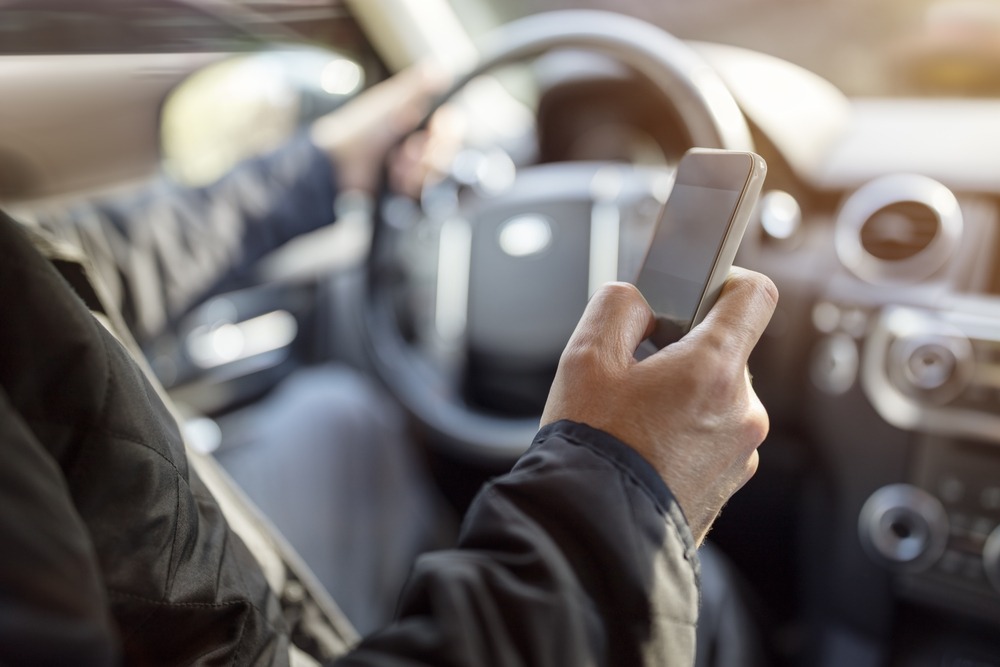
The top three distractions while driving include manual, visual, and cognitive distractions. Each type involves different dangerous activities, all of which take attention away from safe driving and increase the risk of accidents. According to the National Safety Council (NSC), more than 90% of car accidents involve human error, and over 700 people suffer injuries in a distracted driving collision on an average day in the United States.
Cell phone use accounts for many instances of distracted driving, with approximately 10% of all drivers using a mobile device at any given daylight moment in 2018. The National Highway Traffic Safety Administration (NHTSA) notes that texting is the most dangerous of all driver distractions, as taking only five seconds to send or read a text while driving at 55 miles per hour equates to driving the length of a football field with your eyes closed.
However, any distraction can lead to serious consequences for the driver and their victims, and lawyers can help those affected by distracted driving accidents hold the liable party accountable for their damages.
Experts on traffic safety have used data to determine three main types of driving distractions: manual, cognitive, and visual. Each type involves a specific behavior, under which different kinds of habits can be categorized. The Centers for Disease Control and Prevention (CDC) emphasizes that young adults and teens carry the highest risk for distracted driving, particularly high school-aged drivers, and they found no correlation between a teenager’s grades in school and their propensity to drive distracted. Teens whose parents drive distracted have a doubled to a quadrupled chance of driving distracted themselves.
The CDC refers to distractions that involve physically removing your hands from the wheel as manual distractions. Experts recommend driving with two hands and avoiding such manual distractions as:
Without their hands on the wheel, a driver reduces their ability to steer properly or react immediately to sudden traffic hazards, such as an object or animal in the road.
When a driver thinks about something other than the road, they take part in cognitive distractions, which include:
Operating a vehicle requires a driver’s full attention, and failing to focus on the road makes a driver more likely to cause an accident.
Taking your eyes off the road while driving occurs as the result of a visual distraction. Actions that redirect a driver’s attention include:
If a driver cannot see the road ahead of them, they cannot react appropriately to anything from the flow of traffic to unexpected hazards. Even after they focus their visual attention back on the road, they may not have the time they need to prevent a collision.
Manual, cognitive, and visual distractions can occur separately or simultaneously. For example, sending a text message involves all three types of distractions; the driver must take their eyes off the road, divert their attention to their phone, and remove their hands from the wheel to type a text. The greater the driver’s level of distraction, the higher their chances of causing an accident.
According to an article in Frontiers in Behavioral Neuroscience, driving involves high-level brain functions that can be strengthened by the increases in the normal cognitive workload associated with driving, such as moving from sitting at rest in a vehicle to moving the vehicle. However, these functions can decrease when the driver participates in what the study calls “a superfluous cognitive workload,” or additional tasks to complete while driving.
When drivers become aware of the significant dangers associated with distracted driving, they can make changes to improve their safety as well as the safety of their passengers and others on the road. Making a point to complete tasks before leaving can help prevent drivers from attempting to multitask while operating a vehicle, and certain apps can disable phone features while the car is in motion to prevent use.
As a passenger, you can help the driver focus behind the wheel by encouraging them to pay attention to the road while you handle tasks for them. Do not hesitate to speak up if you notice the driver engaging in distracting activities. Helping avoid preventable accidents can save your life and the lives of those around you.
Despite extensive research confirming the dangers of the top three distractions while driving, drivers who take part in manual, cognitive, and visual distractions cause thousands of motor vehicle accidents annually.
If you suffered injuries or lost a family member because of a distracted driver’s negligence in the Pittsburgh, PA area, Berger and Green can establish the liability of the at-fault driver, calculate your damages, and seek fair compensation for your losses. Call our legal team today at (412) 661-1400 for your free case evaluation.